In an industry constantly pushing the boundaries of immersion, a quiet revolution is taking place that might just change how we experience digital worlds forever. While high-resolution graphics and surround sound have long been the staples of gaming immersion, developers are now turning to an often overlooked human sense: touch. The emerging field of haptic feedback coding represents one of the most exciting frontiers in gaming technology, promising to translate the rich auditory landscapes of games into tangible, physical sensations that players can feel through their controllers, suits, and even furniture.
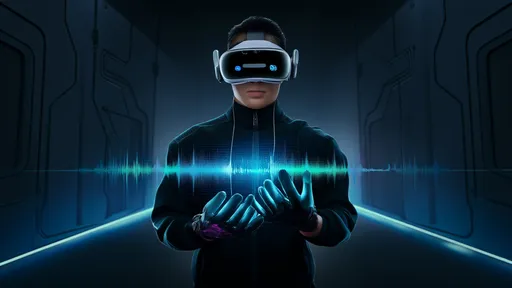
The concept isn't entirely new—game controllers have featured basic vibration motors for decades. But what we're witnessing today is a quantum leap beyond the simple rumble packs of yesterday. Modern haptic technology involves sophisticated algorithms that can deconstruct complex audio signals in real-time and translate them into precisely calibrated vibrations. This isn't about generic shaking; it's about creating a nuanced tactile language that corresponds directly to what players are hearing. When rain begins to fall in a game, players might feel gentle droplets across their palms. When a dragon roars in the distance, the vibration might start faintly in the left side of the controller and intensify as the creature approaches.
The technical challenges involved in real-time audio-to-haptic conversion are substantial. Audio signals contain immense amounts of data that must be processed and translated into vibration patterns within milliseconds to maintain synchronization with visual elements. Developers are employing advanced machine learning algorithms that can categorize sounds—distinguishing between footsteps, weapon fire, environmental effects, and dialogue—and apply appropriate vibration profiles to each category. A sword clashing against armor requires a sharp, metallic vibration pattern entirely different from the deep, resonant thrum of a spaceship engine or the organic squelch of stepping through swampy terrain.
What makes this technology particularly remarkable is its accessibility implications. For hearing-impaired gamers, audio-to-haptic conversion opens up entirely new ways to experience games that were previously inaccessible. Important audio cues—like an enemy sneaking up behind the player or the telltale sound of a hidden mechanism—can be translated into distinct vibration patterns that provide the same gameplay information. This isn't just about making games more immersive; it's about making them more inclusive, ensuring that vital gameplay information isn't locked behind a single sensory experience.
The hardware revolution has been just as crucial as the software advancements. Modern controllers now incorporate multiple high-fidelity vibration motors capable of producing a wide range of frequencies and intensities. Some developers are experimenting with haptic suits that distribute vibrations across the entire body, while others are creating specialized gaming chairs and floors that can translate low-frequency effects into whole-body experiences. The result is a multi-layered tactile experience that can directionally match what's happening on screen—if an explosion occurs to the player's right, the vibrations will predominantly come from that side.
As this technology continues to evolve, we're beginning to see applications beyond gaming. Film studios are experimenting with haptic encoding to create more immersive viewing experiences, while virtual reality developers see it as essential for achieving true presence in digital environments. The potential therapeutic applications are equally promising—researchers are exploring how carefully calibrated vibrations might help with everything from managing anxiety to assisting with physical rehabilitation exercises.
Yet the gaming industry remains at the forefront of this innovation, driven by players' insatiable appetite for deeper immersion. The next generation of haptic technology promises even more sophisticated feedback systems—imagine feeling the difference between walking on grass versus stone, or sensing the precise texture of a virtual object through your controller. Some developers are even working on temperature feedback systems that would allow players to feel the chill of a snowy environment or the warmth of a virtual campfire.
The implementation of these systems requires careful artistic consideration. Game audio designers are now collaborating with haptic specialists to create cohesive sensory experiences where the audio and vibration work in harmony rather than competing for attention. This has given rise to a new specialty sometimes called "haptic design"—the art of creating meaningful tactile experiences that enhance rather than distract from the gameplay. The best implementations are subtle, providing information and atmosphere without becoming overwhelming or gimmicky.
Looking forward, the convergence of haptic feedback with other emerging technologies like cloud gaming presents fascinating possibilities. As games increasingly stream from remote servers, the processing required for audio-to-haptic conversion could happen in the cloud, making sophisticated tactile feedback available even on devices with limited local processing power. This could democratize high-quality haptic experiences, bringing them to mobile devices and lower-end hardware that would otherwise be incapable of real-time audio processing.
The journey from simple vibration to sophisticated haptic coding represents more than just a technical evolution—it's a fundamental rethinking of how we interact with digital experiences. By engaging our sense of touch alongside sight and sound, developers are creating more holistic, immersive experiences that resonate on a deeper physical level. As this technology continues to mature, we may find that the line between digital and physical sensation becomes increasingly blurred, opening up new creative possibilities that we're only beginning to imagine.

By /Aug 26, 2025

By /Aug 26, 2025

By /Aug 26, 2025
By /Aug 26, 2025

By /Aug 26, 2025

By /Aug 26, 2025

By /Aug 26, 2025

By /Aug 26, 2025
By /Aug 26, 2025
By /Aug 26, 2025

By /Aug 26, 2025

By /Aug 26, 2025

By /Aug 26, 2025

By /Aug 26, 2025

By /Aug 26, 2025
By /Aug 26, 2025

By /Aug 26, 2025

By /Aug 26, 2025

By /Aug 26, 2025
By /Aug 26, 2025
