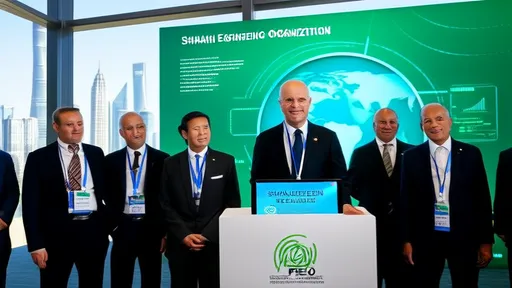
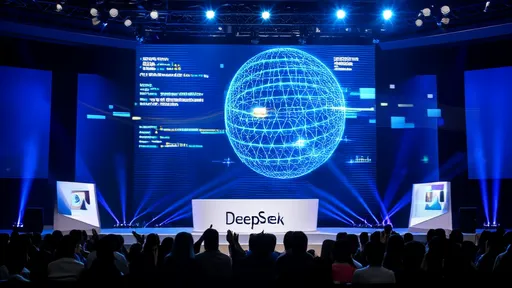
The landscape of artificial intelligence witnessed a remarkable milestone this week as DeepSeek's open-source large language model secured its position among the 2025 Global Top Ten Engineering Achievements. This prestigious recognition places the Chinese-developed AI system alongside groundbreaking innovations ranging from quantum computing advancements to sustainable energy solutions, marking a significant moment for the open-source AI community worldwide.
What makes this achievement particularly noteworthy is the David-and-Goliath narrative that has unfolded in the competitive AI arena. While well-funded corporate laboratories have dominated headlines with their proprietary models, DeepSeek's open-source approach has demonstrated that collaborative development can produce world-class results. The selection committee highlighted the model's exceptional performance across multiple benchmarks while emphasizing its accessibility as a key factor in the decision.
The recognition comes at a pivotal moment for global AI development, as debates intensify around the concentration of AI capabilities within a handful of technology giants. DeepSeek's inclusion in this elite list signals a validation of alternative development models that prioritize broader access and community-driven innovation. Industry observers have noted that this achievement could catalyze increased investment and participation in open-source AI projects globally.
Technical evaluation reports reveal that DeepSeek's model achieves competitive performance in areas including natural language understanding, code generation, and complex reasoning tasks. More impressively, it accomplishes this while maintaining significantly lower computational requirements compared to many proprietary alternatives. This efficiency advantage has attracted attention from organizations seeking to deploy advanced AI capabilities without the substantial infrastructure investments typically associated with cutting-edge models.
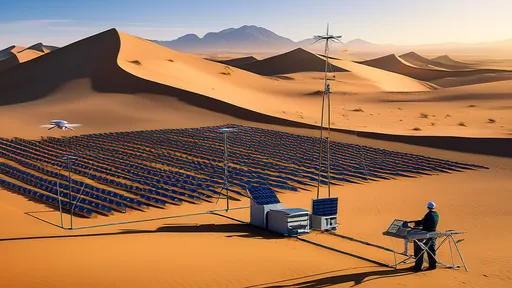
The engineering breakthrough extends beyond raw performance metrics. DeepSeek's architecture incorporates novel training methodologies that reduce energy consumption during both development and deployment phases. This environmental consideration resonated strongly with the awards committee, which has increasingly emphasized sustainability in its evaluation criteria. The model's energy-efficient design sets a new benchmark for responsible AI development in an era of growing concern about the technology's carbon footprint.
Academic institutions have been particularly enthusiastic adopters of the DeepSeek model. Researchers appreciate not only the access to state-of-the-art capabilities but also the transparency that comes with open-source development. The ability to examine model architecture, training data, and implementation details has accelerated research in AI safety, interpretability, and specialized applications. This transparency stands in stark contrast to the black-box nature of many proprietary systems.
Commercial enterprises are finding unexpected value in DeepSeek's approach as well. Several mid-sized technology companies report successfully fine-tuning the base model for specialized applications in legal analysis, medical research, and financial forecasting. The flexibility of the open-source framework allows organizations to create customized solutions without the licensing restrictions and usage limitations common with proprietary alternatives. This adaptability has proven especially valuable in regulated industries where data privacy and control are paramount concerns.
International collaboration has emerged as a defining characteristic of the DeepSeek project's success. Development contributions have come from researchers and engineers across Asia, Europe, and North America, creating a truly global innovation ecosystem. This collaborative spirit aligns with the original vision of the internet as a platform for shared knowledge and collective advancement. The project's governance model, which incorporates input from academic, industry, and public interest stakeholders, represents a novel approach to managing complex technological development.
The economic implications of accessible advanced AI are becoming increasingly apparent. Startups and developing economies now have access to capabilities that were previously available only to well-funded organizations. This democratization effect could potentially reshape global innovation patterns, enabling talent from diverse backgrounds to participate in cutting-edge AI development and application. Early evidence suggests regions with strong technical education but limited capital are particularly well-positioned to benefit from this trend.
Ethical considerations have been central to DeepSeek's development philosophy. The open nature of the project allows for broader scrutiny of potential biases and safety concerns. Independent research groups have published multiple papers analyzing the model's behavior across different demographic groups and use cases. While no AI system is perfect, this transparency enables more comprehensive assessment and mitigation of risks compared to closed systems where evaluation is limited to internal teams or selected partners.
Looking forward, the recognition of DeepSeek's model suggests a potential shift in how society values technological achievement. The awards committee explicitly acknowledged the importance of accessibility and democratic development alongside pure technical capability. This holistic evaluation framework may influence future research priorities and funding decisions across the technology sector. If other award bodies adopt similar criteria, we could see increased emphasis on openness and broad benefit in engineering projects worldwide.
The practical impact of this achievement is already materializing in unexpected domains. Educational institutions report using the model to develop personalized learning tools, while humanitarian organizations are exploring applications in disaster response and public health. The reduced computational requirements make deployment feasible in resource-constrained environments, potentially bringing advanced AI capabilities to regions where they were previously inaccessible. These applications demonstrate how engineering excellence, when combined with accessible design, can generate widespread social benefit.
Industry analysts are closely watching how established technology companies respond to this validation of open-source approaches. Some predict increased investment in open-source projects, while others anticipate more hybrid models that combine proprietary and open elements. The success of DeepSeek's model demonstrates that open development can compete with closed approaches even at the highest levels of technical sophistication. This could potentially reshape competitive dynamics across the AI industry.
The recognition also highlights China's growing influence in advanced technology development. While DeepSeek's model benefits from global contributions, its core development team and primary funding originate from Chinese institutions. This achievement showcases China's capacity for world-class innovation in cutting-edge fields, complementing its established strengths in manufacturing and implementation. The global nature of the project's contributions, however, underscores how technological advancement increasingly transcends national boundaries.
As the AI field continues to evolve at a breathtaking pace, DeepSeek's achievement offers a compelling model for responsible and inclusive development. The combination of technical excellence, energy efficiency, and accessibility sets a new standard for what constitutes engineering achievement in the artificial intelligence domain. This recognition suggests that future breakthroughs may be measured not only by what they accomplish technically, but by how broadly their benefits can be shared across global society.
The inclusion of an open-source AI model among the year's top engineering achievements marks a significant milestone in the democratization of advanced technology. It demonstrates that world-class innovation can flourish outside traditional corporate structures and that collaborative development can produce results competitive with the best proprietary systems. As organizations worldwide study DeepSeek's approach, we may be witnessing the early stages of a broader transformation in how advanced technologies are developed and deployed for global benefit.

By /Oct 20, 2025

By /Oct 20, 2025

By /Oct 20, 2025

By /Oct 20, 2025

By /Oct 20, 2025
By /Oct 20, 2025
By /Oct 20, 2025

By /Oct 20, 2025

By /Oct 20, 2025
By /Oct 20, 2025

By /Oct 20, 2025
By /Oct 20, 2025

By /Oct 20, 2025
By /Oct 20, 2025

By /Oct 20, 2025

By /Oct 20, 2025
By /Oct 20, 2025

By /Oct 20, 2025
