The vast expanse of China's Taklamakan Desert, long known as the "Sea of Death," is witnessing an unprecedented transformation. After years of meticulous planning and execution, the ambitious desert edging project has successfully achieved closure, marking a significant victory in humanity's ongoing battle against desertification. This monumental achievement represents not just an engineering feat but a testament to human perseverance and ecological commitment.
The Taklamakan Desert Edging Project, initiated as part of China's broader ecological restoration efforts, has reached its crucial completion phase with the successful connection of previously separate green barriers. This achievement effectively creates a continuous ecological shield around the desert's perimeter, serving as a formidable barrier against the relentless expansion of sand dunes that have threatened surrounding communities and ecosystems for centuries.
What makes this accomplishment particularly remarkable is the sheer scale of the undertaking. The Taklamakan, covering approximately 337,000 square kilometers, ranks as the world's second-largest shifting sand desert. The successful implementation of the edging project required overcoming numerous challenges, from extreme weather conditions to the logistical nightmare of working in one of the planet's most inhospitable environments. Temperatures in the region can swing dramatically from scorching highs to freezing lows, while sandstorms frequently disrupt work and threaten progress.
The ecological significance of this achievement cannot be overstated. For decades, the advancing desert has posed a serious threat to agricultural lands, transportation infrastructure, and human settlements along its edges. The successful completion of the edging project means that these areas now enjoy increased protection from sand encroachment. Local farmers report that their crops are no longer buried under layers of sand, while transportation routes experience fewer disruptions from drifting dunes.
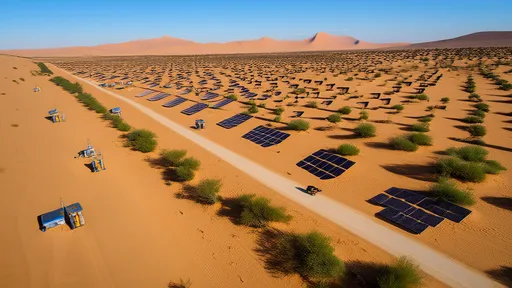
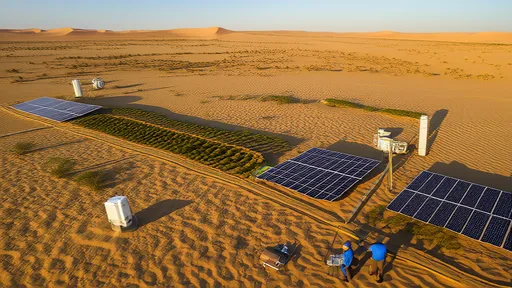
Implementation of the project involved a multi-faceted approach combining traditional desert control methods with innovative technologies. Workers established extensive vegetation belts using drought-resistant species specifically selected for their ability to thrive in arid conditions. These green barriers not only stabilize the sand but also create micro-ecosystems that support local biodiversity. The selection of plant species was carefully considered, with native varieties preferred for their adaptation to the local environment and their minimal water requirements.
Modern engineering solutions played an equally crucial role in the project's success. Advanced irrigation systems, including drip irrigation and moisture retention technologies, ensure that the limited water resources are used with maximum efficiency. Solar-powered pumping stations provide sustainable energy for water distribution, while remote sensing technology monitors vegetation health and sand movement patterns across vast areas that would be impossible to survey manually.
The human dimension of this project reveals stories of extraordinary dedication and resilience. Thousands of workers, scientists, and local volunteers have contributed to this effort, often working under challenging conditions. Many have spent years away from their families, living in temporary settlements near the work sites. Their commitment to transforming one of Earth's most formidable landscapes stands as a powerful example of human determination in the face of environmental challenges.
Local communities have been integral to the project's implementation and success. Their traditional knowledge of the desert environment, passed down through generations, has informed many aspects of the edging strategy. At the same time, the project has provided employment opportunities and economic benefits to residents of surrounding areas. This community involvement ensures that the maintenance and protection of the green barriers will continue long after the initial construction phase.
The timing of this achievement coincides with growing global concern about desertification and climate change. As many regions worldwide face increasing desert expansion, the successful strategies employed in the Taklamakan project offer valuable lessons for other countries grappling with similar challenges. The project demonstrates that with proper planning, adequate resources, and sustained commitment, it is possible to reverse the advance of deserts and restore ecological balance.
International environmental experts have been closely monitoring the project's progress, recognizing its potential implications for global desert control efforts. The techniques developed and refined during the Taklamakan edging project could be adapted for use in other arid regions, particularly in developing countries where desertification threatens food security and livelihoods. The knowledge gained from this massive undertaking represents a significant contribution to the global fight against land degradation.
Looking ahead, the focus will shift to maintaining and strengthening the newly established ecological barrier. This requires ongoing monitoring, regular maintenance of vegetation, and continuous adaptation to changing environmental conditions. Climate change introduces additional uncertainties, as shifting precipitation patterns and temperature fluctuations may affect the sustainability of the green barriers. Researchers are already studying how different climate scenarios might impact the long-term viability of the project.
The economic implications extend beyond immediate environmental benefits. Protected agricultural lands mean improved food security for the region, while stabilized desert edges create opportunities for eco-tourism and sustainable development. The project has also stimulated local economies through job creation and infrastructure development. As the ecological conditions improve, new possibilities emerge for sustainable economic activities that were previously impossible in the desert-threatened border areas.
Scientific research conducted during the project has yielded valuable insights into desert ecology and rehabilitation techniques. Studies on sand stabilization, water conservation, and plant adaptation to extreme conditions have advanced our understanding of how to work with rather than against natural processes. This knowledge is being documented and shared with the international scientific community, contributing to the global body of research on desert management.
The success of the Taklamakan Desert Edging Project represents a milestone in China's broader ecological civilization construction efforts. It demonstrates the country's commitment to addressing environmental challenges through large-scale, well-planned initiatives. The project aligns with international sustainable development goals, particularly those related to climate action, life on land, and sustainable cities and communities.
As the world faces increasing environmental pressures, the Taklamakan achievement offers a message of hope and possibility. It shows that even the most daunting ecological challenges can be addressed through human ingenuity, cooperation, and persistence. The green barrier now encircling the desert stands not just as a physical structure but as a symbol of what can be accomplished when societies commit to protecting and restoring their natural environments.
The completion of the edging project marks the beginning of a new chapter in the relationship between human communities and the Taklamakan Desert. Rather than retreating from the advancing sands, people have found ways to coexist with the desert while protecting their livelihoods and ecosystems. This balanced approach to environmental management may serve as a model for other regions facing similar challenges around the world.
In the coming years, monitoring will continue to assess the long-term effectiveness of the edging project and identify areas for improvement. The knowledge gained will inform future desert control efforts both within China and internationally. As climate patterns continue to evolve, the adaptive management approaches developed through this project will become increasingly valuable for maintaining ecological stability in arid regions worldwide.
The successful closure of the Taklamakan Desert Edging Project represents more than just an engineering achievement—it embodies the possibility of harmonious coexistence between humanity and some of our planet's most challenging environments. As the green barrier matures and strengthens, it will continue to protect communities, support biodiversity, and demonstrate that with vision and determination, we can shape a more sustainable future even in Earth's most formidable landscapes.

By /Oct 20, 2025

By /Oct 20, 2025

By /Oct 20, 2025

By /Oct 20, 2025
By /Oct 20, 2025
By /Oct 20, 2025

By /Oct 20, 2025

By /Oct 20, 2025

By /Oct 20, 2025

By /Oct 20, 2025

By /Oct 20, 2025

By /Oct 20, 2025

By /Oct 20, 2025
By /Oct 20, 2025

By /Oct 20, 2025

By /Oct 20, 2025
By /Oct 20, 2025

By /Oct 20, 2025
