The race to conquer the deepest points of our planet's oceans has entered a new and decisive phase. For decades, the Mariana Trench's Challenger Deep stood as a silent, near-mythical realm, visited by a mere handful of human beings. Today, that isolation is rapidly dissolving. A global surge in the development of full-ocean-depth, or hadal, manned submersibles is unlocking the final frontier of Earthly exploration, driven by a potent mix of national prestige, scientific hunger, and technological ambition. We are witnessing a paradigm shift, moving from isolated expeditions to a new era of sustained, repeatable access to the hadal zone.
The Pioneers and the New Vanguard
The story of modern hadal exploration is often traced back to the Trieste's legendary 1960 descent. For over fifty years, its record for a manned dive stood nearly unchallenged. Then, in 2012, filmmaker and explorer James Cameron piloted the Deepsea Challenger to the bottom of the Challenger Deep, reigniting public and scientific interest. However, these were largely solitary, privately or singularly funded endeavors. The current landscape is fundamentally different, characterized by state-backed, systematic programs aimed at creating permanent assets for oceanographic research.
China has emerged as a dominant force in this new arena. The Fendouzhe (Striver) submersible represents a monumental achievement for the country's deep-sea ambitions. A product of the "13th Five-Year Plan," its development involved over 90 Chinese institutions and corporations. Unlike its predecessors, Fendouzhe is not a one-off vehicle; it is a sophisticated, three-person platform designed for routine scientific missions. Its successful dives in late 2020, which included live-streaming video from the seafloor, were a powerful statement of capability. The submersible is equipped with a sophisticated robotic manipulator arm, sediment samplers, and high-definition imaging systems, allowing it to conduct detailed geological and biological surveys. Its operational integration with the mothership Exploration 2 and the supporting lander systems showcases a comprehensive, systematic approach to hadal exploration that Beijing is keen to leverage for both scientific and strategic influence.
The American Counterpoint and Private Enterprise
In response to these global developments, the United States is reasserting its presence in the deep ocean. The Limiting Factor, a two-person submersible funded by private equity and piloted by explorer Victor Vescovo, completed the Five Deeps Expedition, diving to the deepest point in each of the world's five oceans. Its success proved the viability of a new class of commercially built, yet scientifically capable, hadal craft. What sets the Limiting Factor apart is its Triton Submarines design, which features a revolutionary titanium pressure hull built using a novel forging process, allowing for an unprecedented number of repeated dives to full ocean depth. While a private venture, its capabilities have attracted the attention of the U.S.
Navy and research institutions, highlighting a potential model for public-private partnership in an area traditionally dominated by government funding. Simultaneously, American research institutions are not standing still. The Woods Hole Oceanographic Institution (WHOI), the birthplace of the famed Alvin, is in the advanced stages of designing a new hadal-grade submersible. This new vehicle aims to extend Alvin's legendary legacy to the very bottom of the sea. The project emphasizes increased payload capacity, longer bottom time, and enhanced maneuverability to support a broader range of scientific investigations, from microbiology to geology. This represents the institutional American scientific community's commitment to maintaining a leading edge in deep-ocean research, ensuring the nation remains a primary player in the exploration and understanding of these extreme environments. Established Powers and Collaborative Ventures Japan, a long-standing leader in marine technology with its Shinkai series of submersibles, continues to advance its capabilities.
While the Shinkai 6500 remains a workhorse for abyssal research, Japanese engineers and scientists are actively developing technologies for the next generation of hadal platforms. Their focus has often been on advanced materials for pressure hulls, high-efficiency battery systems, and sophisticated autonomous underwater vehicles (AUVs) that can act as scouts or data-gatherers for manned missions. The Japanese approach is characterized by incremental, high-reliability engineering, ensuring that when a new full-ocean-depth vehicle is launched, it will be a robust and dependable scientific tool. Meanwhile, in Europe, the landscape is marked by collaboration. While no single European nation has launched a standalone hadal submersible program on the scale of China or the U.S., consortia of research institutes and companies across the continent are pooling expertise. Projects are underway to develop key enabling technologies, such as new syntactic foams that can withstand hadal pressures, advanced lighting and sensor packages, and communication systems that can reliably transmit data through miles of water.
This collaborative model leverages the specialized strengths of different countries, from German engineering to French oceanographic science, creating a pan-European capability that, while less centralized, is nonetheless formidable. The Scientific Imperative Driving the Technology The immense cost and technical challenge of building these submersibles are justified by profound scientific questions that can only be answered by direct human presence. The hadal zone, depths from 6,000 to nearly 11,000 meters, is not a barren wasteland. It is a dynamic ecosystem teeming with life uniquely adapted to extreme pressure, cold, and darkness. Microbiologists are eager to study the exotic microbes in these trenches, which possess novel enzymes and biochemical pathways with potential applications in medicine and industry. The discovery of organisms that thrive on chemical energy from hydrothermal vents and seeps challenges our very understanding of the conditions necessary for life, with implications for astrobiology and the search for life on other worlds. Furthermore, the trenches are active geological laboratories. They are the subduction zones where tectonic plates collide, generating massive earthquakes and tsunamis.
Placing human observers and sophisticated instruments directly on the seafloor allows geologists to study fault lines in unprecedented detail, potentially leading to better models for predicting seismic hazards. The trenches also act as massive carbon sinks, with organic material from the surface ocean settling and being sequestered in the deep. Understanding this process is critical for refining global climate models. A scientist inside a submersible can make real-time decisions, spot subtle anomalies, and collect context-rich samples in a way that purely remote systems still cannot match. Challenges and the Future Horizon The path to routine hadal exploration is fraught with immense challenges. The pressure at full ocean depth is a crushing 1,100 atmospheres, equivalent to the weight of a jumbo jet on a postage stamp. Engineering a spherical hull to withstand this force, while also providing viewports, electrical penetrators, and manipulator interfaces, remains a pinnacle of marine engineering. Power systems must be both high-density and incredibly safe, providing energy for propulsion, life support, and scientific instruments for up to twelve hours on the seafloor.
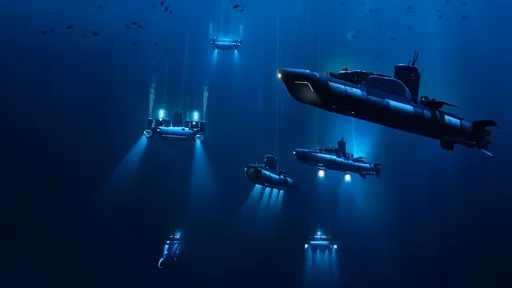
Communication is another hurdle; radio waves cannot penetrate water, so communication with the surface is limited to slow, acoustic telemetry or, at best, limited bandwidth through a fiber-optic tether. Looking ahead, the next decade will likely see the establishment of the first permanent or semi-permanent observatories on the hadal seafloor, serviced by these new submersibles. We can also anticipate greater integration of manned and unmanned systems, where a mothership on the surface coordinates the activities of a manned submersible, several AUVs, and a fleet of landers. This "swarm" approach would allow for the simultaneous collection of data across a wide area, dramatically increasing scientific yield. The technological spillovers from this race are already benefiting other fields, from offshore energy to advanced materials science. As more nations and entities gain the capability to routinely visit the deepest ocean, the final chapter of initial planetary exploration is being written, not in the void of space, but in the profound darkness of our own world's ultimate depths.

By /Oct 20, 2025

By /Oct 20, 2025

By /Oct 20, 2025

By /Oct 20, 2025
By /Oct 20, 2025
By /Oct 20, 2025
By /Oct 20, 2025
By /Oct 20, 2025
By /Oct 20, 2025
By /Oct 20, 2025
By /Oct 20, 2025
By /Oct 20, 2025
By /Oct 20, 2025
By /Oct 20, 2025

By /Oct 20, 2025
By /Oct 20, 2025
By /Oct 20, 2025
By /Oct 20, 2025
