Taklamakan Desert Lock-Edge Project Selected as One of the Top 10 Global Engineering Achievements in 2025"

Oct 20, 2025 By

The vast expanse of the Taklamakan Desert, often referred to as the "Sea of Death," has long been a symbol of nature's indomitable power. Stretching across China's Xinjiang region, this immense desert has witnessed centuries of shifting sands and relentless winds. Yet today, it stands at the center of one of humanity's most ambitious ecological endeavors—the Taklamakan Desert Edge Stabilization Project. Recently, this monumental initiative has earned global recognition by being selected among the 2025 Top Ten Engineering Achievements Worldwide, marking a pivotal moment in the history of environmental conservation and sustainable development.


The selection committee highlighted the project's innovative approach to combating desertification, a challenge that affects nearly every continent. What sets the Taklamakan initiative apart is its comprehensive strategy that combines ancient wisdom with cutting-edge technology. For generations, local communities have understood the delicate balance required to survive in this harsh environment. Now, their traditional knowledge is being integrated with satellite monitoring, drone surveillance, and advanced material science to create a sustainable barrier against the desert's expansion.


Engineering Marvel in the Desert

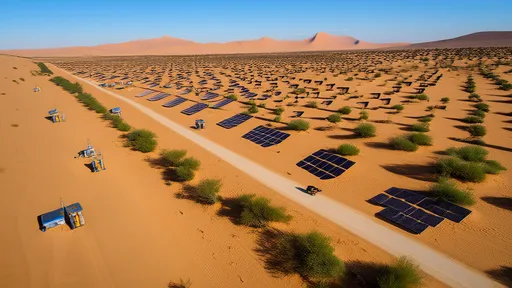
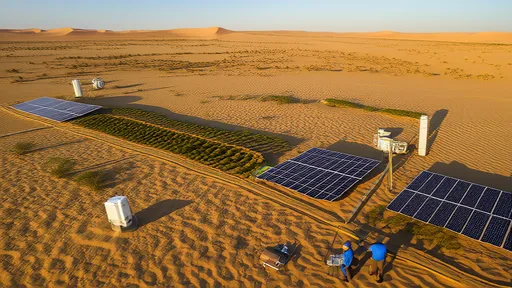
The core of the project involves creating a "green lock" around the desert's periphery—a multi-layered defense system designed to stabilize the moving sand dunes. This isn't merely about planting trees; it's about creating an entire ecosystem that can sustain itself. Engineers have developed specialized drought-resistant vegetation that can thrive in the desert's extreme conditions. These plants are strategically positioned in patterns that disrupt wind patterns and prevent sand movement, while their root systems help bind the soil together.


One of the most remarkable aspects of the engineering solution is the water management system. In a region where water is scarcer than gold, the project has implemented an innovative moisture conservation technique that captures morning dew and rare rainfall. Special polymer materials are mixed with the soil to increase its water retention capacity, while underground irrigation systems deliver precise amounts of water to each plant. This sophisticated approach ensures that every drop of water is utilized with maximum efficiency.


Global Significance and Impact

The recognition of the Taklamakan project comes at a critical time for global environmental efforts. Desertification affects over 250 million people worldwide and threatens nearly one-third of the Earth's land surface. The success of this Chinese initiative provides a replicable model for other nations facing similar challenges. Countries across Africa, the Middle East, and Central Asia are already studying the methods employed in the Taklamakan, hoping to adapt them to their own desert regions.


International environmental organizations have praised the project not only for its technical achievements but also for its socioeconomic impact. The stabilization of the desert's edge has protected vital transportation routes, including highways and railways that connect western China to the rest of the country. Furthermore, it has safeguarded agricultural land and communities that were previously threatened by advancing sand dunes. Local residents have found new employment opportunities in maintaining the green belt and managing the sophisticated monitoring systems.


Technological Innovations Driving Success

What makes the Taklamakan project truly groundbreaking is its integration of multiple technological disciplines. Artificial intelligence plays a crucial role in predicting sand movement patterns and optimizing the placement of vegetation. Satellite imagery provides real-time monitoring of the entire desert perimeter, while ground-based sensors collect data on soil moisture, wind speed, and plant health. This constant stream of information allows engineers to make data-driven decisions and quickly respond to any issues that arise.


The materials science behind the project represents another significant advancement. Researchers have developed biodegradable stabilization nets made from organic compounds that gradually release nutrients into the soil as they decompose. These nets provide immediate protection for young plants while enhancing soil quality over time. Additionally, specially engineered microorganisms are being used to accelerate soil formation and improve its structural integrity.


Challenges and Future Prospects

Despite its success, the project has faced numerous challenges that required innovative solutions. The extreme temperature variations—from scorching daytime heat to freezing nights—tested both equipment and vegetation. Engineers responded by developing temperature-resistant materials and breeding plant varieties that can withstand these dramatic fluctuations. Sandstorms, which can reach hurricane-force winds, initially destroyed many early plantings until researchers developed deeper root systems and windbreak configurations that could survive such conditions.


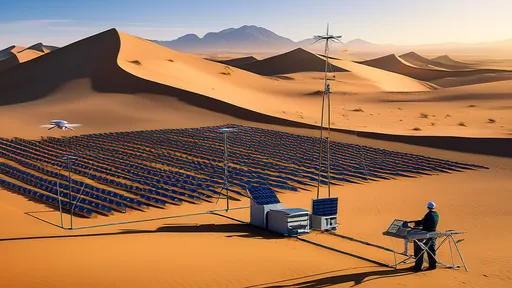
Looking ahead, project leaders envision expanding the green belt deeper into the desert, creating oasis zones that can support limited agriculture and even tourism. The long-term vision includes establishing research stations within the desert to study climate change and develop new environmental technologies. There are also plans to connect the stabilization project with renewable energy initiatives, potentially using solar farms in stabilized areas to power the monitoring and irrigation systems.

International Collaboration and Knowledge Sharing

The global recognition of the Taklamakan project has sparked increased international cooperation in desertification control. Chinese engineers and scientists are now working with counterparts from countries like Algeria, Saudi Arabia, and Australia to share knowledge and develop joint research programs. This collaboration extends beyond government levels to include academic institutions, private companies, and non-governmental organizations, creating a global network dedicated to combating desertification.

Training programs have been established to educate engineers and environmental specialists from other nations about the techniques developed in the Taklamakan. These knowledge-transfer initiatives ensure that the lessons learned in China's desert can be applied effectively in different environmental contexts. The project has become a living laboratory where the world's best minds come together to address one of humanity's most pressing environmental challenges.

Environmental and Economic Benefits

The ecological impact of the desert stabilization extends far beyond simply stopping sand movement. The newly established vegetation has begun to create microclimates that support increased biodiversity. Bird species that had disappeared from the region are returning, and small mammals are finding habitat in the stabilized areas. The improvement in air quality has been measurable, with reduced dust storms leading to better health outcomes for local populations.

Economically, the project has stimulated growth in multiple sectors. The technology developed for the desert stabilization has commercial applications in other arid regions worldwide, creating export opportunities for Chinese companies. Tourism has increased as visitors come to see the engineering marvel, bringing much-needed revenue to local communities. Agricultural production in surrounding areas has become more reliable as the threat of desert encroachment diminishes, ensuring food security for the region.

A Model for Sustainable Development

The Taklamakan Desert Edge Stabilization Project represents more than just an engineering achievement—it embodies a new approach to sustainable development that balances human needs with environmental protection. Unlike previous large-scale environmental projects that sometimes created new problems while solving others, this initiative has been designed with holistic consideration of ecological, social, and economic factors.

The project's inclusion in the 2025 Top Ten Engineering Achievements serves as recognition that humanity's greatest engineering challenges now include environmental restoration and climate change mitigation. It demonstrates that with careful planning, innovative thinking, and sustained commitment, we can not only prevent environmental degradation but actively reverse it. The success in the Taklamakan offers hope for other threatened ecosystems around the world and proves that even the most daunting environmental challenges can be overcome through human ingenuity and determination.

As climate change continues to pose increasing threats to ecosystems worldwide, the lessons from the Taklamakan will become increasingly valuable. The project stands as a testament to what can be achieved when long-term vision is combined with technical excellence and community engagement. It represents a blueprint for future environmental engineering projects and a beacon of hope in the global effort to create a more sustainable relationship between humanity and our planet.

Recommend Posts
Tech

Hubble Space Telescope Observes Galaxies 10 Billion Light Years Away

By /Oct 20, 2025

In the vast cosmic theater where light travels for eons before reaching our instruments, the European Space Agency's Euclid space telescope has begun delivering unprecedented views of galaxies so distant that their light has been journeying toward us for nearly ten billion years. These are not merely pretty pictures but profound cosmological documents, revealing structures and patterns from when the universe was in its relative youth. The telescope's extraordinary capability to peer across such immense stretches of space and time marks a significant leap in our quest to understand the fundamental architecture of the cosmos.
Tech

Humanoid Robots Expected to Systematically Reconstruct Human Production and Lifestyle

By /Oct 20, 2025

In the quiet hum of a Tokyo electronics factory, a pair of synthetic hands assembles a microchip with a precision that surpasses human capability. Across the globe, in a Copenhagen hospital, a humanoid form assists an elderly patient out of bed, its movements gentle and intuitive. These are not scenes from a science fiction novel but glimpses of a rapidly unfolding reality. Humanoid robots, once confined to research labs and cinematic fantasies, are poised to systematically reconstruct the very fabric of human production and daily life.
Tech

AI-Powered Robotics Achieve Highly Biomimetic Movement and Interaction

By /Oct 20, 2025

In a quiet laboratory in Zurich, a robotic hand gently picks up a raw egg without cracking it, then seamlessly transitions to crushing a soda can with calculated force. This demonstration represents more than just mechanical precision—it embodies the quiet revolution happening at the intersection of artificial intelligence and robotics, where machines are learning to move and interact with the nuanced grace of biological organisms.
Tech

Boston Consulting Group Forecasts Huge Market Value for eVTOL by 2040

By /Oct 20, 2025

Boston Consulting Group has released a groundbreaking forecast that positions the electric vertical takeoff and landing aircraft market as one of the most promising technological frontiers of our century. According to their comprehensive analysis, the eVTOL sector is projected to reach staggering market valuations by 2040, potentially transforming urban mobility, logistics, and regional transportation across global markets. The numbers being discussed are not merely impressive—they represent what could become one of the most significant technological shifts in modern transportation history.
Tech

The South-to-North Water Diversion Midline Project Offers a Solution for Global Water Resource Allocation

By /Oct 20, 2025

The South-to-North Water Diversion Project stands as one of the most ambitious engineering endeavors in human history, a testament to China's determination to address one of its most pressing environmental challenges. Spanning thousands of kilometers, this monumental infrastructure project channels water from the water-rich Yangtze River basin in southern China to the parched northern regions, including the capital Beijing and the surrounding industrial heartlands. While conceived as a domestic solution, the project's scale, technological innovations, and operational framework offer a compelling blueprint for addressing global water scarcity, presenting a model that could be adapted to quench the thirst of other arid regions around the world.
Tech

World Federation of Engineering Organizations Adopts Shanghai Declaration" Calling for Engineering to Shape a Green Future

By /Oct 20, 2025

Against the backdrop of escalating climate crises and deepening environmental degradation, the World Federation of Engineering Organizations (WFEO) has issued a powerful call to action through the landmark Shanghai Declaration. This comprehensive document, ratified during the federation's recent general assembly in China's bustling metropolis, represents a watershed moment for global engineering communities, urging an immediate and radical reorientation of professional practices toward sustainable development.
Tech

DeepSeek Open-Source Large Language Model Selected as One of the Top Ten Global Engineering Achievements in 2025

By /Oct 20, 2025

The landscape of artificial intelligence witnessed a remarkable milestone this week as DeepSeek's open-source large language model secured its position among the 2025 Global Top Ten Engineering Achievements. This prestigious recognition places the Chinese-developed AI system alongside groundbreaking innovations ranging from quantum computing advancements to sustainable energy solutions, marking a significant moment for the open-source AI community worldwide.
Tech

AI in Science" Strategy Positions EU as a Hub for AI-Driven Scientific Innovation

By /Oct 20, 2025

The European Commission has unveiled its groundbreaking "AI in Science" strategy, positioning the continent as the future epicenter of artificial intelligence-driven scientific innovation. This ambitious initiative represents a fundamental shift in how Europe approaches scientific discovery, integrating cutting-edge AI technologies across all research domains to accelerate breakthroughs that could reshape our understanding of the world.
Tech

Oracle Bone Script AI Supercomputer Connected to Hundreds of Thousands of NVIDIA GPUs

By /Oct 20, 2025

In a bold move that signals the intensifying global race for artificial intelligence supremacy, Oracle has unveiled plans to construct what industry analysts are calling the most powerful AI supercomputer ever conceived. The ambitious project, revealed during Oracle CloudWorld in Las Vegas, will connect hundreds of thousands of NVIDIA GPUs into a single, unified computing behemoth designed specifically to tackle the most complex AI challenges facing humanity.
Tech

Taklamakan Desert Border Lock Project Successfully Achieves Dragon Convergence

By /Oct 20, 2025

The vast expanse of China's Taklamakan Desert, long known as the "Sea of Death," is witnessing an unprecedented transformation. After years of meticulous planning and execution, the ambitious desert edging project has successfully achieved closure, marking a significant victory in humanity's ongoing battle against desertification. This monumental achievement represents not just an engineering feat but a testament to human perseverance and ecological commitment.
Tech

EU's Applied AI Strategy in Healthcare and Pharmaceuticals

By /Oct 20, 2025

The European Union has embarked on a transformative journey with its "Applied AI" strategy, specifically targeting the healthcare and pharmaceutical sectors. This ambitious initiative represents a paradigm shift in how artificial intelligence is leveraged to address some of the most pressing challenges in medical care, drug development, and public health systems across member states. The strategy comes at a critical juncture, as Europe faces demographic changes, rising healthcare costs, and the lingering effects of global health crises that have exposed vulnerabilities in traditional healthcare models.
Tech

Perseverance Successfully Collects Martian Rock and Soil Samples"

By /Oct 20, 2025

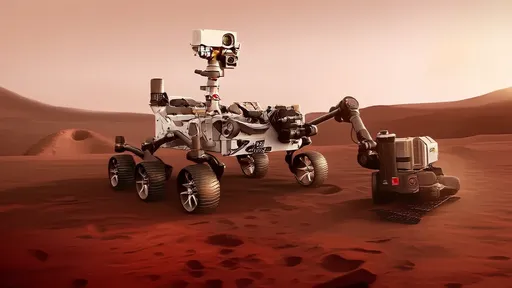
Against the rusty-red backdrop of the Martian landscape, a robotic arm extends with delicate precision. Its titanium drill bit whirs to life, biting into the ancient, alien rock. This is not a scene from science fiction; it is the daily work of NASA's Perseverance rover, and its latest achievement marks a pivotal moment in humanity's quest to understand the cosmos. The rover has successfully collected a series of pristine rock and soil samples, sealing them within ultraclean tubes for a future journey they were never meant to take—a one-way ticket to Earth.
Tech

Hubble Space Telescope Selected as One of the Top Ten Global Engineering Achievements of 2025

By /Oct 20, 2025

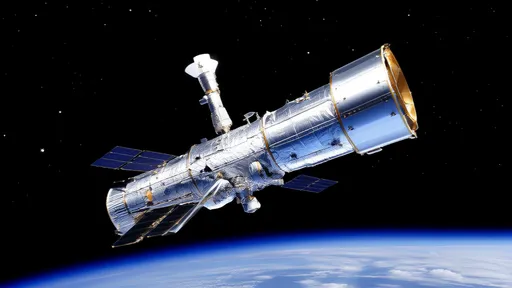
In a remarkable recognition of astronomical advancement, the European Space Agency's Euclid space telescope has been selected among the 2025 Top Ten Global Engineering Achievements. This prestigious listing, compiled by an international consortium of engineering academies, highlights projects that demonstrate extraordinary technical innovation and profound impact on human civilization. Euclid's inclusion speaks volumes about its ambitious mission to unravel the deepest mysteries of our universe: dark matter and dark energy.
Tech

Taklamakan Desert Lock-Edge Project Selected as One of the Top 10 Global Engineering Achievements in 2025"

By /Oct 20, 2025

The vast expanse of the Taklamakan Desert, often referred to as the "Sea of Death," has long been a symbol of nature's indomitable power. Stretching across China's Xinjiang region, this immense desert has witnessed centuries of shifting sands and relentless winds. Yet today, it stands at the center of one of humanity's most ambitious ecological endeavors—the Taklamakan Desert Edge Stabilization Project. Recently, this monumental initiative has earned global recognition by being selected among the 2025 Top Ten Engineering Achievements Worldwide, marking a pivotal moment in the history of environmental conservation and sustainable development.
Tech

EU Plans to Establish AI-Enabled Advanced Medical Screening Centers

By /Oct 20, 2025

The European Union has unveiled an ambitious plan to establish a network of AI-powered advanced medical screening centers across member states, marking one of the most significant healthcare initiatives in the bloc's history. This groundbreaking project aims to revolutionize early disease detection and transform preventive medicine throughout Europe. With an initial investment of €2.1 billion from the EU's Horizon Europe programme, supplemented by additional funding from member states and private partnerships, the initiative represents a strategic response to growing healthcare challenges and technological opportunities in medical diagnostics.
Tech

Perseverance Completes Oxygen Production Experiment on Mars"

By /Oct 20, 2025

On a world 140 million miles away, where the thin air carries the red dust of ages and twin moons punctu the alien sky, a small box no larger than a toaster has written a new chapter in the story of human exploration. Aboard NASA's Perseverance rover, an instrument called MOXIE has successfully executed a feat straight out of science fiction: it has breathed the air of Mars and, from the thin, toxic Martian atmosphere, created pure, breathable oxygen. This is not merely a scientific milestone; it is the first, tangible proof that we can live off the land on another world, turning a hostile environment into a potential home.
Tech

Taklamakan Desert Edge Lock Project Sets a New Model for Global Desertification Control"

By /Oct 20, 2025

In the heart of China's Xinjiang region, an ambitious ecological project is quietly reshaping one of the world's most formidable landscapes. The Taklimakan Desert, covering approximately 337,000 square kilometers, has long represented nature's ultimate challenge - an ocean of shifting sands where temperatures swing dramatically and vegetation struggles to survive. Yet against this harsh backdrop, Chinese scientists and local communities have been implementing what has become known as the Desert Edge Locking Project, an initiative that's drawing international attention for its innovative approach to combating desertification.
Tech

Progress Made by Multiple Countries in the Development of Full-Ocean-Depth Manned Submersibles

By /Oct 20, 2025

The race to conquer the deepest points of our planet's oceans has entered a new and decisive phase. For decades, the Mariana Trench's Challenger Deep stood as a silent, near-mythical realm, visited by a mere handful of human beings. Today, that isolation is rapidly dissolving. A global surge in the development of full-ocean-depth, or hadal, manned submersibles is unlocking the final frontier of Earthly exploration, driven by a potent mix of national prestige, scientific hunger, and technological ambition. We are witnessing a paradigm shift, moving from isolated expeditions to a new era of sustained, repeatable access to the hadal zone.