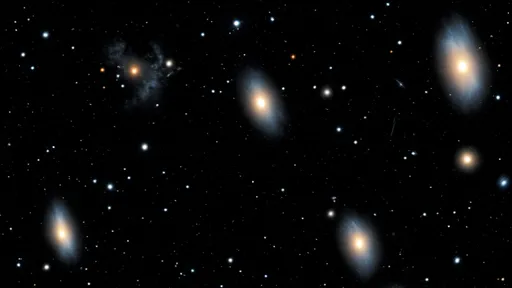
In the vast cosmic theater where light travels for eons before reaching our instruments, the European Space Agency's Euclid space telescope has begun delivering unprecedented views of galaxies so distant that their light has been journeying toward us for nearly ten billion years. These are not merely pretty pictures but profound cosmological documents, revealing structures and patterns from when the universe was in its relative youth. The telescope's extraordinary capability to peer across such immense stretches of space and time marks a significant leap in our quest to understand the fundamental architecture of the cosmos.
The launch of the Euclid mission was met with anticipation from the global astronomical community, but the initial data has surpassed even the most optimistic projections. Unlike its famous predecessor, the Hubble Space Telescope, which provided deep but narrow fields of view, Euclid is designed to survey enormous swathes of the sky with remarkable clarity and depth. Its primary mission is to create the most extensive and accurate 3D map of the Universe ever attempted, focusing on the elusive dark universe—the dark matter and dark energy that together govern the expansion and structure of everything we see. The recent images of galaxies 10 billion light-years away are the first, breathtaking steps in this ambitious cartographic endeavor.
What makes these observations so revolutionary is the sheer volume and quality of data. A single observation campaign can capture the light from tens of thousands of galaxies in a field of view far larger than the full moon. Each of these faint, reddish smudges of light is an entire galaxy, home to hundreds of billions of stars, seen as it was when the universe was only about a third of its current age. The telescope's sensitive instruments measure the precise shapes and redshifts of these galaxies. The subtle distortions in their shapes, an effect known as weak gravitational lensing, act as a direct tracer for the distribution of dark matter—the invisible scaffolding upon which galaxies form. By mapping this distortion across the sky, scientists can literally chart the unseen.
The cosmological implications of this data are profound. The large-scale structure of the universe—the cosmic web of filaments, voids, and clusters—is a fossil record of the initial conditions following the Big Bang. By studying galaxies 10 billion light-years away, astronomers are effectively looking back at the universe during a critical period of its evolution. This was an era when dark energy, the mysterious force driving the accelerated expansion of the universe, began to dominate over the force of gravity. The precise distribution and clustering of these ancient galaxies provide a stringent test for our cosmological models. Do they align with the predictions of the standard Lambda-CDM model, or do they hint at new physics, at a need to revise our understanding of gravity or the nature of dark energy itself? Euclid's data is the new arbiter.
Beyond the statistical mapping of dark matter, these deep-field images are a treasure trove for galactic archaeology. The galaxies observed are not the majestic, well-ordered spirals we see in our cosmic neighborhood. They are often smaller, more irregular, and intensely active, undergoing rapid star formation and frequent mergers. Studying them allows astronomers to understand how galaxies like our own Milky Way assembled over cosmic time. The data reveals the timeline of galaxy growth, from the initial building blocks to the massive structures we see today. It provides clues about how supermassive black holes at the centers of galaxies co-evolve with their stellar populations, a symbiotic relationship that is still poorly understood.
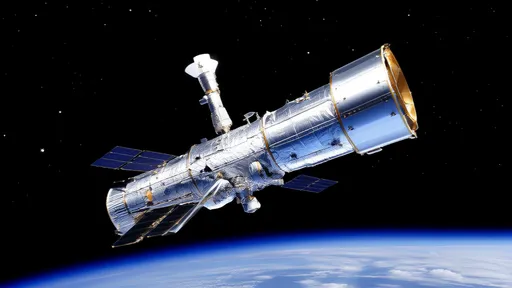
The technological prowess behind the Euclid telescope cannot be overstated. Positioned at the Sun-Earth Lagrange point 2, a stable gravitational spot about 1.5 million kilometers from Earth, it operates in an environment free from atmospheric interference and significant temperature fluctuations. Its 1.2-meter diameter mirror collects faint light, which is then analyzed by two main instruments: a visible-wavelength camera (VIS) that measures galaxy shapes with exquisite precision, and a near-infrared spectrometer and photometer (NISP) that determines their distances. The coordination between these instruments to simultaneously capture shape and distance data for millions of galaxies is a feat of engineering that enables the mission's core science.
As the mission continues, the stream of data will become a flood. Over its planned six-year survey, Euclid is expected to observe billions of galaxies, constructing a map that covers over a third of the sky. This will not be a static picture but a dynamic, multi-epoch dataset that will allow scientists to search for subtle changes over time. The legacy of Euclid will extend far beyond its primary goals. It will serve as a foundational resource for astronomers for decades to come, much like the Sloan Digital Sky Survey did for a generation of ground-based astronomy. It will identify rare and exotic objects for further study with other powerful telescopes, like the James Webb Space Telescope, and will likely uncover cosmic phenomena that we have not yet even imagined.
In conclusion, the Euclid space telescope's first deep look into the distant universe is more than a technical achievement; it is a fundamental expansion of human perception. By capturing the light from galaxies 10 billion light-years away, it connects us directly to a much younger cosmos, allowing us to witness the slow, grand dance of structure formation. The data now being collected will challenge our theories, refine our models, and undoubtedly reveal new mysteries. In the quest to understand the dark universe and our place within it, Euclid has opened a new window, and the view is already transforming our comprehension of everything.
By /Oct 20, 2025

By /Oct 20, 2025

By /Oct 20, 2025

By /Oct 20, 2025

By /Oct 20, 2025

By /Oct 20, 2025

By /Oct 20, 2025

By /Oct 20, 2025

By /Oct 20, 2025
By /Oct 20, 2025

By /Oct 20, 2025
By /Oct 20, 2025
By /Oct 20, 2025
By /Oct 20, 2025

By /Oct 20, 2025

By /Oct 20, 2025
By /Oct 20, 2025

By /Oct 20, 2025
