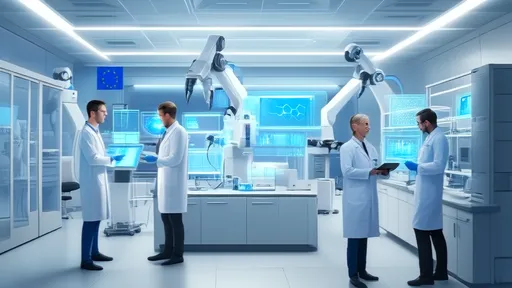
In the quiet hum of a Tokyo electronics factory, a pair of synthetic hands assembles a microchip with a precision that surpasses human capability. Across the globe, in a Copenhagen hospital, a humanoid form assists an elderly patient out of bed, its movements gentle and intuitive. These are not scenes from a science fiction novel but glimpses of a rapidly unfolding reality. Humanoid robots, once confined to research labs and cinematic fantasies, are poised to systematically reconstruct the very fabric of human production and daily life.
The journey of humanoid robotics has been a long one, marked by incremental breakthroughs and occasional leaps. For decades, the field grappled with fundamental challenges: achieving stable bipedal locomotion, replicating the dexterity of the human hand, and developing artificial intelligence capable of understanding and navigating the complex, unstructured world we inhabit. Early models were often cumbersome, expensive, and limited to controlled environments. However, a confluence of technological advancements has shattered these barriers. Breakthroughs in actuator technology have led to lighter, stronger, and more energy-efficient joints. Advanced sensor suites, including LiDAR, stereo vision, and tactile sensors, now provide robots with a rich, multi-modal perception of their surroundings. Most critically, the rise of sophisticated AI, particularly large-scale models and simulation-to-real-world training, has endowed these machines with unprecedented cognitive abilities. They can now learn from demonstration, adapt to dynamic situations, and even reason about their tasks.
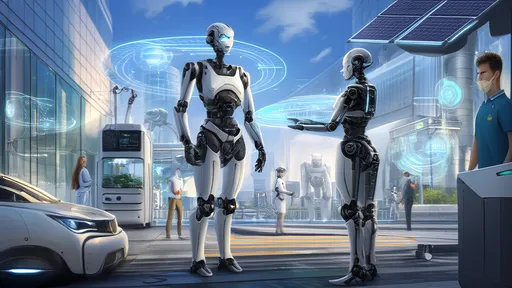
This technological maturation is converging with a powerful economic and social imperative. Many industrialized nations face a demographic time bomb of aging populations and shrinking workforces. The demand for labor in manufacturing, logistics, and especially caregiving is outstripping supply. Simultaneously, there is a growing desire to remove humans from dull, dirty, and dangerous jobs. Humanoid robots, with their anthropomorphic design, are uniquely positioned to address these challenges. Their human-like form factor means they can theoretically operate in environments built for people, using the same tools, navigating the same staircases, and interacting with the same interfaces. This universality is their greatest strength, promising a single platform capable of performing a vast array of tasks across different sectors.
The transformation of the industrial landscape will be among the most immediate and profound impacts. Modern manufacturing and logistics are intricate ballets of supply chains, assembly lines, and material handling. While specialized robots have automated many discrete tasks, the final integration and the myriad of non-repetitive, complex jobs have remained stubbornly human domains. Humanoid robots are set to change this. On the production line, they can work alongside their human counterparts, handling tasks that require fine motor skills and decision-making, such as intricate wiring, quality inspection with nuanced judgment, and machine tending. In warehouses, their ability to walk, bend, and lift allows them to navigate dense, dynamic storage facilities, picking and packing items of varying shapes and sizes with a flexibility that fixed robotic arms cannot match. This is not merely about replacing human labor but about creating a new, hybrid workforce where humans supervise, manage, and collaborate with robotic partners, leading to unprecedented levels of productivity and efficiency.
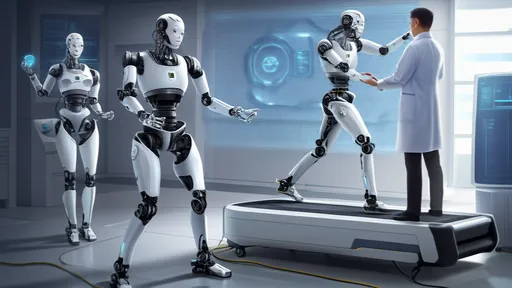
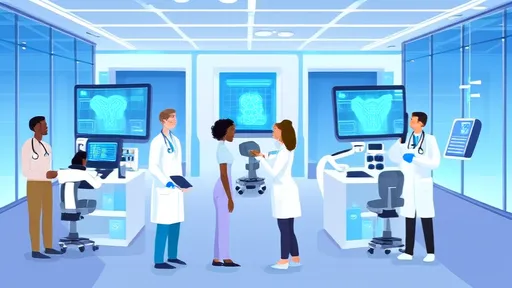
Beyond the factory walls, the service and domestic spheres stand to be utterly reshaped. Imagine a future where humanoid assistants are a common sight in retail, guiding customers, managing inventory, and even handling checkout. In healthcare, the potential is staggering. Robots could serve as tireless companions and aides for the elderly and disabled, providing physical support, monitoring vital signs, and offering social interaction to combat loneliness. They could assist nurses with strenuous patient transfers, deliver supplies, and sanitize rooms, alleviating the immense burden on healthcare systems. Within the home, these robots could evolve from today's simple vacuum cleaners to true domestic partners, capable of cooking meals, tidying up cluttered living spaces, and providing security. The very concept of household chores and eldercare could be redefined, freeing up vast amounts of human time for more creative, social, or leisurely pursuits.
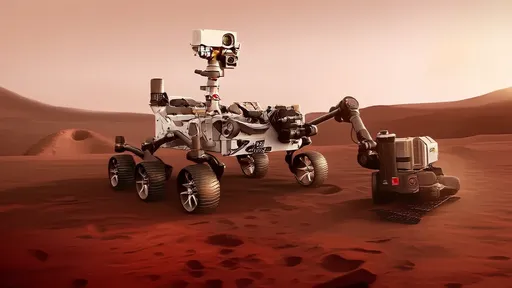
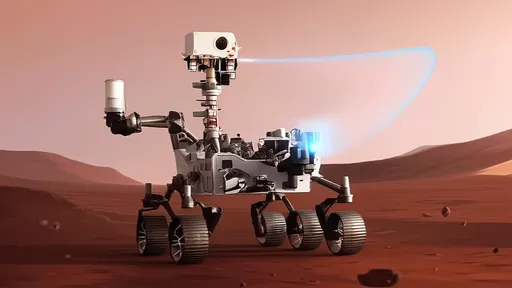
Perhaps the most futuristic, yet increasingly plausible, application lies in space exploration and hazardous environments. The surfaces of the Moon and Mars are environments too hostile for prolonged human presence, yet they require a level of adaptability and problem-solving that current rovers lack. A humanoid robot astronaut, controlled remotely or operating with a high degree of autonomy, could set up habitats, conduct complex scientific experiments, and perform repairs using human-designed tools. On Earth, they could be deployed for disaster response, venturing into collapsed buildings after an earthquake or navigating radioactive zones, performing search and rescue missions that would be far too risky for human first responders.
However, this robotic dawn is not without its profound challenges and ethical dilemmas. The most frequently cited concern is the displacement of human workers. As robots become capable of performing not just manual but also cognitive tasks, what will be the future of work? This necessitates a fundamental societal conversation about economic models, retraining programs, and potentially, universal basic income. Furthermore, the integration of highly intelligent, autonomous machines into our daily lives raises critical questions of safety, privacy, and accountability. How do we ensure these robots make ethical decisions in unpredictable situations? Who is responsible when a robot causes harm? The development of robust safety protocols, clear legal frameworks, and transparent AI is paramount.
There is also a deeper, more philosophical unease about the "uncanny valley" and the potential for social isolation. As robots become more lifelike, they may evoke feelings of unease or erode genuine human connection if they become primary companions. The psychological impact of a world populated by synthetic beings is a frontier we are only beginning to explore. Ensuring that this technology enhances, rather than diminishes, our humanity will be a critical guiding principle.
Despite these challenges, the momentum behind humanoid robotics is undeniable. A global race is underway, with tech giants, automotive leaders, and ambitious startups all vying for dominance. The goal is no longer just to build a robot that can walk; it is to create a general-purpose platform, a new form of intelligence that can learn and perform almost any task a human can. The business models are evolving from selling expensive hardware to providing "Robotics as a Service," where companies lease robotic labor for specific functions. The ecosystem is expanding to include app-store-like platforms where developers can create and sell specialized skills for different robot models.
We are standing at the precipice of a revolution as significant as the industrial or digital revolutions. Humanoid robots represent more than just a new tool; they are a foundational technology that will systemically reconstruct how we produce goods, deliver services, and experience daily life. They promise a world of greater abundance, safety, and freedom from mundane toil. Yet, they also demand a level of wisdom, foresight, and ethical consideration unlike any we have faced before. The path forward is not predetermined. It will be carved by the choices we make today—in our research priorities, our policy decisions, and our cultural conversations. The age of humanoid robots is not coming; it is already here, and it is inviting us to reimagine the very essence of what it means to be human in a world we now share with our own creations.

By /Oct 20, 2025
By /Oct 20, 2025
By /Oct 20, 2025

By /Oct 20, 2025

By /Oct 20, 2025

By /Oct 20, 2025
By /Oct 20, 2025
By /Oct 20, 2025

By /Oct 20, 2025
By /Oct 20, 2025
By /Oct 20, 2025
By /Oct 20, 2025

By /Oct 20, 2025
By /Oct 20, 2025
By /Oct 20, 2025
By /Oct 20, 2025
By /Oct 20, 2025

By /Oct 20, 2025
